by Geoff Ryman
This book is a piece of fiction with some elements based on real people. It revolves around the story of The Wonderful Wizard of Oz. The three main characters are in three moments in time. First is Dorothy, which is the Dorothy in the real world who suffered a hard life whose substitute teacher (Frank Baum, original author of The Wonderful Wizard of Oz) writes of her life. Second if France Gump, also knows as Judy Garland, the actress playing the role of Dorothy of the original movie adaptation. Lastly is Jonathan, an ailing movie actor who trails after the history of Judy Garland and the original Dorothy to piece together their lives and in doing so figure out his own.
This book began well enough but about halfway through I began to not like this book at all. This probably began when Dorothy's Uncle Henry sexually assaulted Dorothy, repeatedly, then she goes slightly mental. She eventually flees her home and then later in life is admitted to a mental institution. Judy Garland actually has her story concluded about 1/3 into the book with a section of the recollection of Judy's mother at the moment before she dies. Then with Jonathan, he is actually a gay actor and is ailing and going slightly mad in the end. Pretty much all the characters met bad endings, if not literally than poetically very sad.
First I did not like the overall gloomy plot of the story. The original Story of Oz is encouraging, with a story of redeeming characteristics at the end. This has none of this. The message I sort of get from this story is "Life screws good people over, deal with it". Life is shit as it is, I do not need to read 450 pages for anyone to tell me that. When I read a book I want to be inspired, at the very least I want to feel for the characters and care. I ultimately fail to engage with any of his characters. Okay, even if one wanted to make this a really sad story, that's fine. Worse still is the jolting form of story-telling that leaves the reader unsatisfied with the prose being used to describe the full breadth of the situation and emotion. By the end of the story, I simply did not care about the characters and wished the story would just end.
Second, Ryman tags on characters about 2/3 into the book. For instance the character of Bill, the counselor for Jonathon. This is the most glaring introduction of a new character. Furthermore, several new concepts are introduced pretty late into the story that again pulls the reader out of being totally immersed in the story. Ryman seems to tag on plot points just for the sake of moving the story along. It is a very cheap approach to story telling. Overall, this book started off well enough. By the last 50 pages I simply lost interest and could not wait to be done with this book. I feel
Markus Zusak's Book Thief is a better book (in tackling the themes of tragedy and living a hard life) compared to this. Very poor read.
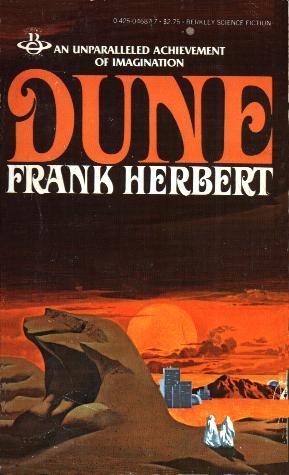 by Frank Herbert